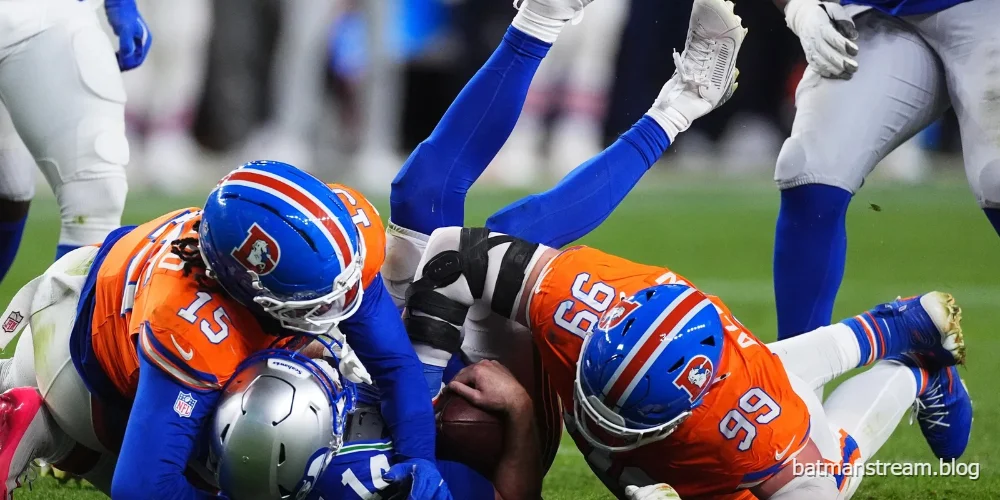
The Denver Broncos found a way to defeat the Seattle Seahawks 17-14 in overtime on Thursday night, even as their offense struggled to produce meaningful yardage. Wil Lutz delivered the decisive moment with a 53-yard field goal, while Denver’s defense forced two interceptions and repeatedly put pressure on quarterback Sam Darnold.
The victory at Empower Field at Mile High moved Denver to 4-2 for the season and kept its unbeaten home record intact. However, the result came with a clear warning for head coach Sean Payton: the Broncos cannot expect their defense to compensate indefinitely for an offense that managed just 168 total yards.
Bo Nix completed 17 of 27 passes for 107 yards, taking two sacks and finishing without a passing touchdown. Denver still secured the win, but the quarterback’s limited production left plenty of questions despite the positive result.
Denver’s Defense Delivers When It Matters
The Broncos relied heavily on their defense to overcome the offensive shortcomings. Denver recorded five sacks and intercepted Darnold twice, with Ja’Quan McMillian producing the crucial turnover in overtime.
McMillian’s interception gave the Broncos possession in Seattle territory and created the opportunity to end the game without requiring Nix to lead a long drive. Denver moved into position for Lutz, who converted from 53 yards to secure the victory.
The defensive performance was particularly important because Seattle had opportunities to take control late in the game. Denver’s offense struggled to sustain drives, repeatedly returning the ball to the Seahawks and putting pressure on its own defense to produce another stop.
Instead of allowing those missed opportunities to decide the contest, the Broncos forced the turnovers that ultimately made the difference.
The result improved Denver’s record to 4-2, while Seattle fell to 3-3. For the Broncos, it was another example of how their defensive strength can keep them competitive even when the offense is far from its best.
Bo Nix and the Broncos Offense Have Work to Do
Denver’s 168-yard total was one of the most striking numbers from the game. According to NFL.com, it marked the first time the Broncos had won a game with fewer than 175 total yards since John Elway’s first start in 1983.
The offense did show some promise during two scoring drives. One covered 79 yards across 16 plays and ended in a touchdown, while another went 44 yards over nine plays for a second score.
Outside those possessions, however, Denver found little rhythm. The team struggled to move the chains consistently, limiting its ability to build on the advantage and put Seattle away before overtime.
Nix’s passing numbers reflected the problem. He finished with 107 yards through the air and a passer rating of 71.1, failing to produce a touchdown pass. The Broncos’ passing game lacked the explosive plays that can stretch a defense and create easier opportunities for the running game.
The result also came after Payton took over play-calling duties from offensive coordinator Davis Webb the previous week. Although Denver earned the victory, the limited production suggests that significant adjustments remain necessary.
Nix focused on the result after the game, emphasizing the importance of coming through a difficult stretch with a winning record. The quarterback acknowledged that the team would need to identify ways to improve during the following week.
Seahawks Fail to Capitalize on Denver’s Mistakes
Seattle had a chance to take advantage of Denver’s offensive difficulties but could not consistently convert its opportunities into points. The Seahawks’ own turnover problems proved costly, particularly when the game reached overtime.
Darnold was intercepted twice, with the second giveaway allowing Denver to set up the winning kick. Those mistakes erased some of the benefit Seattle gained from forcing the Broncos’ offense into repeated short possessions.
The Seahawks also faced a defense that generated pressure throughout the night. Five sacks disrupted their passing attack and helped Denver prevent Seattle from turning its opportunities into a decisive advantage.
Seattle ultimately managed 14 points, enough to force overtime but not enough to overcome the Broncos’ defensive performance. The loss dropped the Seahawks to 3-3 and left them with questions of their own about ball security and their ability to finish close games.
Wil Lutz Seals the Victory From 53 Yards
Once McMillian’s interception gave Denver favorable field position in overtime, the Broncos had an opportunity to win without asking their offense to cover a large distance.
Lutz made the most of it, sending his 53-yard attempt through the uprights to end the contest at 17-14. The kick capped a game in which Denver’s special teams and defense carried much of the responsibility for securing the result.
For a team that had struggled to generate offense for long stretches, the short path to the winning score was significant. Denver did not need a late touchdown drive or a major passing play; it needed its defense to produce one final opportunity and its kicker to convert.
That combination proved enough against Seattle.
What the Win Means for Denver
The Broncos can take confidence from reaching 4-2 after a demanding opening stretch, particularly with their home record still perfect. Their defense has demonstrated an ability to pressure opposing quarterbacks and create turnovers in high-leverage situations.
But the victory also exposed the limits of relying on defensive heroics. An offense that produces only 168 yards leaves little room for error, even when the defense is playing well. Against opponents that protect the ball more effectively, Denver may find it harder to turn such performances into wins.
Payton and Nix now face the task of improving the passing game, finding more consistent production on early downs and keeping drives alive. The team has shown it can win close contests, but a more productive offense would reduce the pressure on its defense and kicker.
For Seattle, the immediate priority is to review the turnovers that helped decide the game. The Seahawks had a chance to leave Denver with a victory, yet the overtime interception gave their opponents the opening they needed.
The Broncos leave the matchup with the win and a 4-2 record. Their defense deserves much of the credit, but the next step will be ensuring that the offense contributes enough to make future victories less dependent on late-game escapes.
Comments (0)
No comments yet. Be the first to share your thoughts!
Leave a Reply
Note: Links and URLs are strictly prohibited. All comments undergo moderation before being published.